Monday, July 19, 2010

Wild strawberries
Black mustard flowers
Cornish cherries
Cornish figs
Crab apples


Even while on holiday our chef Adam Clark has been rustling through bushes, treetops and hedgerows to see what food he can forage. He's very happy indeed with what he turned up ….


Black mustard flowers: We use these in some salads, especially with meat dishes. You can eat the young leaves, though shredding them finely is advisable as they could be a little course and overpowering. The flowers pack a very strong mustard punch and can be deceptive. When you take your first bite, the flavour starts off delicately but can come on quite strong. They are quite delicious though!


Wild strawberries: Wow! I've found not one, but three three different places where I can harvest these little beauties and says they are quite a delicacy. My dad has them growing along the fence in his driveway and I've also found them growing on some Cornish stone walls near Trevaunance Cove - a quite beautiful setting near woodland. They taste great on their own, and if you can get enough, you can make a flavoured vinegar for salads.


My first Cornish fig tree! Never seen them in this country before. They are still quite green at the mo but the leaves were very impressive and I kept one for the beach to keep me covered! Then there was a beautiful cherry tree, very colourful and inspiring. Then I had a good look at the hedgerow apples.Crab apples are great for me too as I start to think of all the jams and jellies that I will be making over the next couple of months. I’ll start with some berry ones, then will move onto apple, then rosehip. Exciting times for a cook!

Thursday, June 24, 2010

Try Shakespeare’s weight loss vegetable 


Our head chef Adam Clark has been foraging on the cliff top outside the hotel again and this time he’s been harvesting rock samphire.

The name samphire comes ‘sampierre’ or ‘herbe de St. Pierre’, the herb of the fisherman’s saint. It can be used in salads or cooked as a vegetable.

Rich in omega-3 oils, anti-oxidants, vitamin C and minerals, rock samphire oil is popular in anti-ageing cosmetics. In traditional folk medicine, it was used to help weight loss and was a popular vegetable in Shakespeare's time. In King Lear, Shakespeare refers to the dangerous practice of collecting rock samphire from cliffs: "Half-way down / Hangs one that gathers samphire; dreadful trade!"

The flavour of rock samphire is distinctive and quite a delicacy and should be cooked to bring out the best flavour. Don't try it raw - you won't like it!

Adam said: “When I was first tried it, I have to say I was not really a fan. I found the flavour a little strange.
“That, however, did not put me off foraging some for myself.
“In search of a solution to the strange flavour problem, I found a recipe for pickling it and that seems to be the best way to deal with this plant.
“Apparently, in Mallorca rock samphire is sold in every supermarket, pickled in jars. The locals adore it and eat it for breakfast!
“Maybe we should include it as part of our Cornish breakfast.”


Friday, June 11, 2010

The tastes of summer


The taste of summer

This is our new BBQ being fired up for the first time - a little taster of what our guests have to look forward too.


Ox eye daisies

Look what we have right here on our doorstep. This photo was taken just outside the hotel. We use the leaves on salads. It makes a lovely interesting salad leaf, you can eat the closed buds, and the petals are great sprinkled over salads. They have a lovely fragrance and flavour to them. The leaves can be tough, so pick young fresh ones.


Yesterday our chef Adam got really excited while out walking with his family. Not only did he find a bountiful supply of sea purslane, he got his first glimpse of local marsh samphire, or sea asparagus.

The season is just beginning, so the purslane and samphire is still young, but there’s plenty of it, so our menus will feature them heavily over the next few weeks as one of our seashore vegetables served with different species of local best market fish.

Young plants can be eaten raw, but older ones should be cooked in boiling unsalted water. You can also fold them into an omelet, toss in salads or deep fry for a snack.


Wednesday, May 26, 2010

Gorse icecream, anyone?


Ever wondered what gorse-flavoured icecream would taste like? We did, so we went foraging for some on the cliff overlooking Mawgan Porth beach.

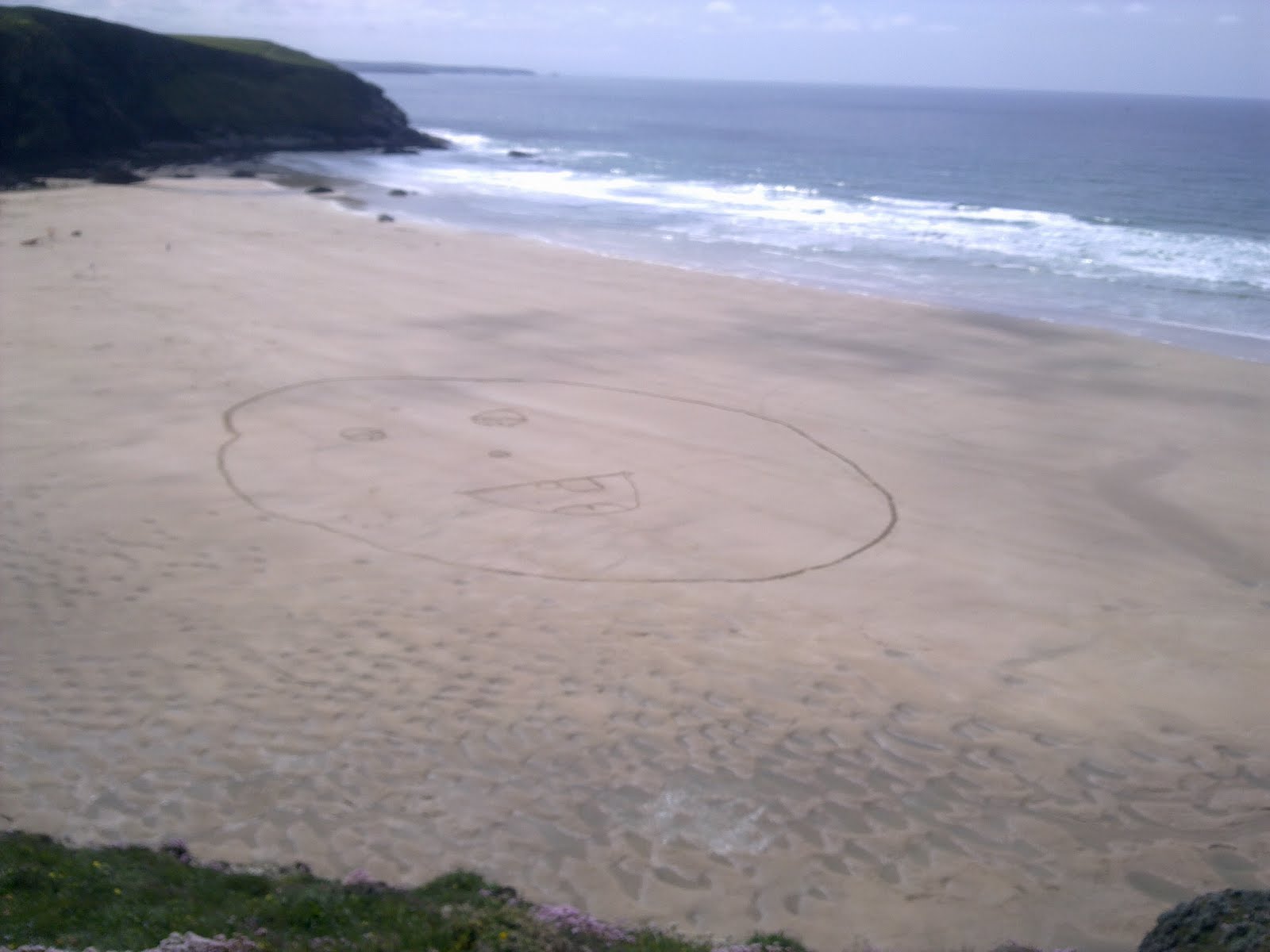
While we were there picking gorse flowers and lapping up the view, we spotted a smiley face someone had drawn in the sand and that seemed to sum things up here at Bedruthan.

Gorse flowers have a unique scent and flavour that really comes through in icecream. Our chef Adam Clark dried the flowers overnight, then infused them into an icecream base. The result was a banana and coconut-like flavour. He served it with spiced pineapple tart.

Adam also found some three cornered garlic, which is different to wild garlic (Ramsons. The stalks give a lovely garlicky chive flavour and the flowers are bursting little buds of garlic just delicious on salads or, as we used them on Saturday night, to garnish our spring chickens.

Tuesday, May 11, 2010

It's Purslane today!


This morning chef has been foraging down at the cliff path again and found some beautiful sea Purslane .

Purslane is an excellent seashore vegetable that we are really lucky to find on the cliffs around here. It is usually found growing on salt marshes below the high tide mark and especially fringing channels and pools in salt marshes.

Now we're really looking forward to our lunch! Chef's been telling us how these leaves have a very interesting flavour and are excellent either just raw through salads, or quickly blanched in boiling water then served with butter, parsley, lemon juice and seasoning. Yummy.

Monday, May 10, 2010

Another great excursion to do on your holiday!


Another great tip from chef, although not food related this time! He has been back to his youth on a 2hr BMX ride!

"It was brilliant! It was an adrenalin rush. I experienced a range of terrain, most of which is off road bridleways, farm tracks, back lanes, byways and woodland single track. The circular route (between 10 and 25km) twists and turns around scenic countryside and whilst riding I got to see many traditional tin mines as we rode in and around areas such as witches woods, the disused quarries and Mars! It was called Mars because of the terrain and the water in the disused quarry is deep red!

It started over in Scorrier, near Truro and took me through all the Countryside near St.Day and Caharrick, the Bissoe trail ran nearby which is a bit like the Camel trail - handy for those that would like an easier cycle!"

The bike ride was organised with Mobius and is a great way to see some Cornish countryside. It certainly left me feeling exhilarated!

http://www.itsadventuresouthwest.co.uk/main/en/provider-15058.html

Monday, May 3, 2010

Chef's been Foraging Again


We're perfectly placed here on the coast to forage the best seaside veg Cornwall has to offer. Infact I think we need to spare a thought for Paul the barman who looked up from the beach to see Chef hanging from the clif! But for the benefit of our guests, he has been returning with some fresh sea beet, ramsons (or wild garlic) and Alexander's. Amongst other dishes, guests have enjoyed an amazing Braised shin of beef with a nettle and ramson risotto. For those of you who can go yourselves, Sea beet is bang on season and can be found around the cliffs; it cooks like spinach and chef has been using it with fish and other seaside veg. Ramson's are nearing the end of their season as they are starting to flower but can still be used, like us, in risotto's, soup and as a garnish. If you find Alexanders, chef's tip is to blanch the stems for a good 10 minutes, ensuring the strong tough taste is replaced with something soft and angelic.

Pancakes stuffed with seabeet:
Large bunch of seabeet
150g Cheddar Cheese (grated)
2 peeled tomatoes
Salt & pepper

Wash the sea beet and pull the leaves from the stems. Cook for 10 minutes in a sealed pan, drain and chop. When cool, mix together with the grated cheese, salt and pepper. Peel the tomatoes and slice. Use the filling to stuff in cooked pancakes. (Make sure you wrap the mixture up well by putting the filling in the middle of the pancake and folding two facing edges over and tucking the remaining two underneath). Heat for a couple of mins each side before serving. Delicious!