Wednesday, September 8, 2010

A wonderful wedding that didn’t cost the earth


The words ‘green wedding’ can conjure up visions of a bare foot bride in a hemp sack banqueting on brown rice.

Not so at Bedruthan Steps. The hotel takes great pleasure in hosting weddings, and great pride in ensuring that sustainable does not mean drab, over-priced or lacking in luxury.

Bedruthan was witness to a beautiful wedding here last month that was as stylish, fun and eco-conscious as the couple getting married.

Chrissie and Jonno Page live in Newquay and have a quintessentially Cornish ‘how we met’ story. Jonno, a chef and surf instructor on Tolcarne Beach, asked Chrissie out after coming to her rescue when her nose came into closer contact with her board than is usually advised.

A few years later when they decided to marry, the couple knew they wanted a sustainable wedding. For Bedruthan, that meant working with them to create a celebration that reflected their personalities and respected their budget, the environment and the comfort and enjoyment of their guests.

The couple are surfers, so the environment matters to them as much as it does to us. From 100% biodegradable sheep poo paper invitations to borrowing and returning shells from the beach for their table decorations, this couple wanted to celebrate without impacting negatively on the environment.

And they did. The menu was carefully chosen to be as sustainable as possible - all our ingredients are sourced as locally as possible and in line with our responsible purchasing policy.

Chrissie’s mum’s family is French, so instead of the usual dessert, our chef surprised her with a croquembouche, a stunning French cake made of a pyramid of profiteroles.

Transport is usually the biggest factor in a wedding's carbon footprint, but our eco-hero and heroine chose the most sustainable mode of transport around. Guests staying in Newquay were ferried to and from the wedding using a Bio Travel mini bus, which meant a smaller carbon footprint and fewer cars on the road.

Chrissie said: “Where do we start to thank you?
“Our day was perfect. We had the most wonderful time.
“The venue looked beautiful, the food was simply out of this world and chef's croquembouche actually reduced me, my mum and my entire French family to tears (and then set off the next table too).
“It was magnificent.
“To the French, it is such a tradition, and they were so honoured to have the cake, but none of us were expecting something so stunning and intricate, it really made the day.
“People are still talking about the food now. It was a hugely important part of our day and chef exceeded all our expectations.”

Congratulations Chrissie and Jonno. We are so pleased your day was perfect and wish you many more perfect days together.

Friday, September 3, 2010

Bread is good for you


Toast, sandwiches, bagels, naan, wraps, pitta…whichever way you butter it, bread is a splendid invention.

A slice or two contains many of the vital elements that fuel our bodies through the day, supplying B vitamins, calories, fibre, protein, iron and minerals. Knead we say more?

So keen are we on bread here at Bedruthan that we've organised a bread-making break especially for those of you who want to learn the art of leavening, kneading and fermenting.

The course is taught by Tom Hazzledine, aka Baker Tom. He started bread-making at the age of six, mixing up flour and water in the bathroom sink with his brother and baking it in the family oven. “We made a hell of a mess,” says Tom.

Now he bakes more than 200 organic loaves a day at his shop in Truro, and supplies Jamie Oliver’s 15 restaurant just down the road from us at Watergate Bay.

Tom’s been working hard to change bread’s bad wrap. His aim is to encourage people to rediscover bread in all its glorious forms and flavours, and to realise that bread can be good for you as well as delicious.

He believes industrially-made bread may be behind many of today’s wheat intolerances. “Supermarket bread has no real crust, so you don’t chew it properly,” he says. “Chewing triggers the enzymes needed to fully break down the bread in our stomachs.”

Tom makes a mean carrot, mustard and thyme bloomer, not to mention a fantastic foccacia and his Guinness and black treacle bread won the 2008 Royal Cornwall Show best new product award.

Tom is passionate about bread and loves running his master classes. “I help people produce better bread using their own oven and things they’ve probably got lying around already.

“Things like water sprays to create steam, garden tiles as pizza stones and terracotta pots instead of tins.

“Bread should be like any other food: you regularly make it yourself at home and get it from a restaurant or bakery when you don’t have time or fancy something special.”

Bedruthan’s Bread Making Break runs from the 5th to 7th of November and costs from £297 (£60 course fee).

http://www.bakertom.co.uk

Wednesday, August 25, 2010

Bedruthan the Giant saw some strange and wonderful sights on Mawgan Porth Beach this week:

A mermaid lolling on the sand.


A moated castle, one of many new developments going up across Cornwall.

A fortress bedecked with a feathered flag.

A couple of cuddly snakes, slithering and sliding down to the sea.

Another beautiful mermaid reclining gracefully on the sand.

A gigantic one-eyed sea monster.

How! A noble-looking Red Indian.

A plump snow man with big hair.

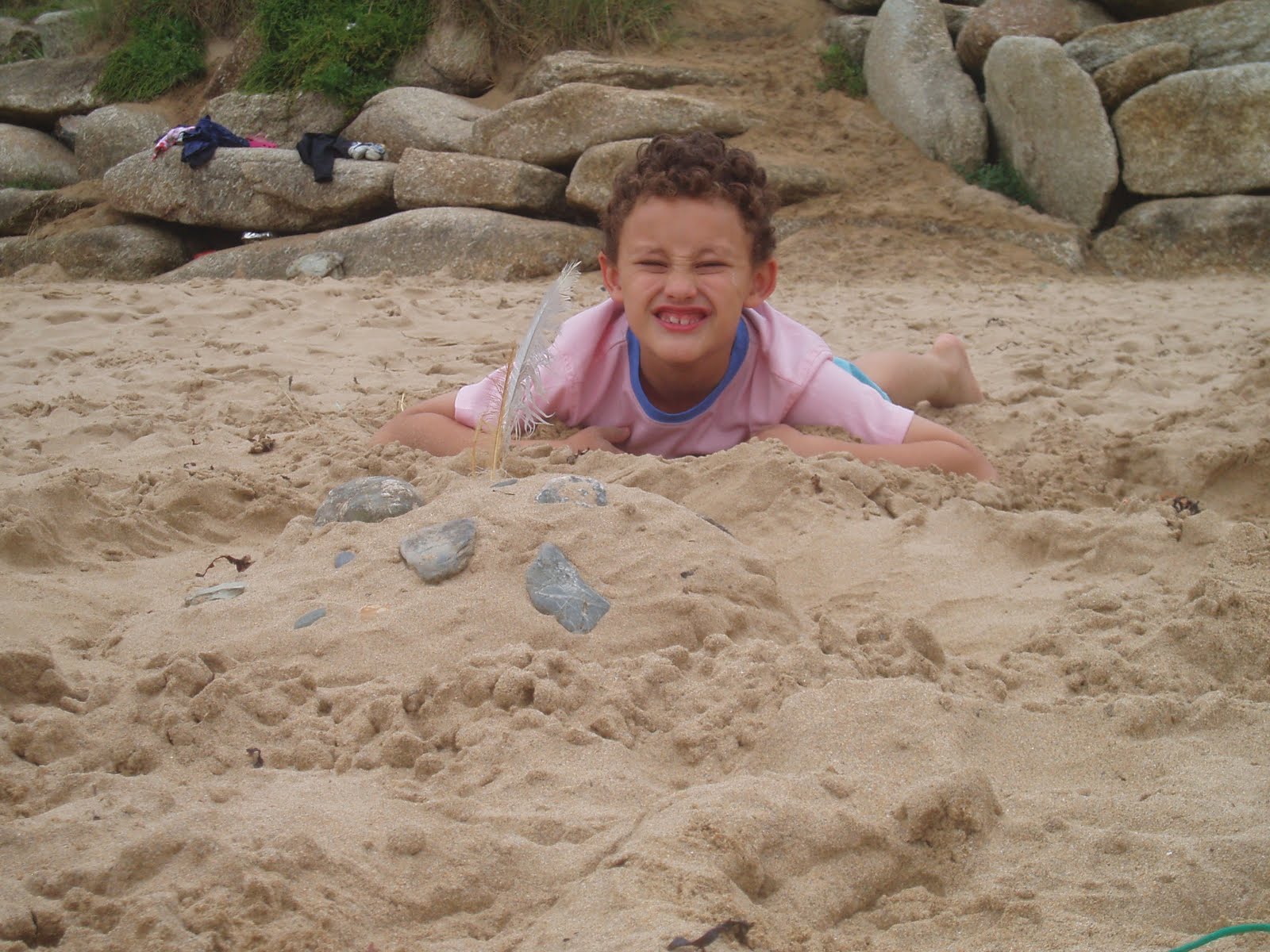
No, Bedruthan has not been hallucinating. These marvels were created by children and their parents staying at the hotel as part of Bedruthan's weekly beach combing and family art activity.

Well done indeed to all the artists...I was staggered by your ingenuity as I strode across the bay the other day.

Friday, August 6, 2010


Our Sustainability Manager Suzannah Newham loves leading expeditions of guests and staff down onto the beach below the hotel to explore the rock pools.

Monday, July 19, 2010

Wild strawberries
Black mustard flowers
Cornish cherries
Cornish figs
Crab apples


Even while on holiday our chef Adam Clark has been rustling through bushes, treetops and hedgerows to see what food he can forage. He's very happy indeed with what he turned up ….


Black mustard flowers: We use these in some salads, especially with meat dishes. You can eat the young leaves, though shredding them finely is advisable as they could be a little course and overpowering. The flowers pack a very strong mustard punch and can be deceptive. When you take your first bite, the flavour starts off delicately but can come on quite strong. They are quite delicious though!


Wild strawberries: Wow! I've found not one, but three three different places where I can harvest these little beauties and says they are quite a delicacy. My dad has them growing along the fence in his driveway and I've also found them growing on some Cornish stone walls near Trevaunance Cove - a quite beautiful setting near woodland. They taste great on their own, and if you can get enough, you can make a flavoured vinegar for salads.


My first Cornish fig tree! Never seen them in this country before. They are still quite green at the mo but the leaves were very impressive and I kept one for the beach to keep me covered! Then there was a beautiful cherry tree, very colourful and inspiring. Then I had a good look at the hedgerow apples.Crab apples are great for me too as I start to think of all the jams and jellies that I will be making over the next couple of months. I’ll start with some berry ones, then will move onto apple, then rosehip. Exciting times for a cook!

Thursday, June 24, 2010

Try Shakespeare’s weight loss vegetable 


Our head chef Adam Clark has been foraging on the cliff top outside the hotel again and this time he’s been harvesting rock samphire.

The name samphire comes ‘sampierre’ or ‘herbe de St. Pierre’, the herb of the fisherman’s saint. It can be used in salads or cooked as a vegetable.

Rich in omega-3 oils, anti-oxidants, vitamin C and minerals, rock samphire oil is popular in anti-ageing cosmetics. In traditional folk medicine, it was used to help weight loss and was a popular vegetable in Shakespeare's time. In King Lear, Shakespeare refers to the dangerous practice of collecting rock samphire from cliffs: "Half-way down / Hangs one that gathers samphire; dreadful trade!"

The flavour of rock samphire is distinctive and quite a delicacy and should be cooked to bring out the best flavour. Don't try it raw - you won't like it!

Adam said: “When I was first tried it, I have to say I was not really a fan. I found the flavour a little strange.
“That, however, did not put me off foraging some for myself.
“In search of a solution to the strange flavour problem, I found a recipe for pickling it and that seems to be the best way to deal with this plant.
“Apparently, in Mallorca rock samphire is sold in every supermarket, pickled in jars. The locals adore it and eat it for breakfast!
“Maybe we should include it as part of our Cornish breakfast.”


Friday, June 11, 2010

The tastes of summer


The taste of summer

This is our new BBQ being fired up for the first time - a little taster of what our guests have to look forward too.


Ox eye daisies

Look what we have right here on our doorstep. This photo was taken just outside the hotel. We use the leaves on salads. It makes a lovely interesting salad leaf, you can eat the closed buds, and the petals are great sprinkled over salads. They have a lovely fragrance and flavour to them. The leaves can be tough, so pick young fresh ones.


Yesterday our chef Adam got really excited while out walking with his family. Not only did he find a bountiful supply of sea purslane, he got his first glimpse of local marsh samphire, or sea asparagus.

The season is just beginning, so the purslane and samphire is still young, but there’s plenty of it, so our menus will feature them heavily over the next few weeks as one of our seashore vegetables served with different species of local best market fish.

Young plants can be eaten raw, but older ones should be cooked in boiling unsalted water. You can also fold them into an omelet, toss in salads or deep fry for a snack.