Friday, February 25, 2011

Christabelle's Pasties Stolen by Pesky Piskies


By Bedruthan Head Chef Adam Clark

Today, I received a lovely handmade card from a young guest called Christabelle. She is a member of the Bowler family who took part in our pasty-making day. Unfortunately, it seems that the Cornish piskies ran off with Christabelle’s pasties, they were that well made! And they happened to be stolen on the day that the Cornish pasty got international status; I can assure you ours were all authentic!

Well, after looking everywhere for the spot where these pesky piskies may have hidden the pasties, we decided that Christabelle and her mum should come back and help me make some more. So today, after breakfast, we had a mini pasty-making session down in Café Indigo and yet again, the pasties that Christabelle and her mum made were awesome!

I was not going to let these ones out of my sight. So I got them straight in the oven and they were lovely and warm when I delivered them to the ballroom where Christabelle’s grandparents were just about to set out on their long journey home. I am sure they enjoyed their stop off with Christabelle’s beautifully crafted pasties to keep them going.

Also you will see some bread I've made recently - move over Baker Tom - and one of the largest lemons I have ever seen. I found a tree of them in the Mediterranean dome at Eden!

Oh, and one last photo. This one was taken outside Kingsley village in Fraddon. There's a huge sign up selling my friend Tim’s mackerel baps in aid of ‘fish fight’ - Hugh Fearnley Whitingstall's Channel 4 eye-opener about fish farming. Tim, who is head chef at River Cottage Axeminister and stayed with us last October, has had a large part to play in getting fish shops across the country to put sustainable fish on their menus and it's something we care about very much here at Bedruthan too.

Friday, January 21, 2011

Billy Whiz Keeps Younger Guests Giggling

Billy Whiz is one of our favourite children's entertainers here at the hotel. He and his naughty rabbit Dusty are often to be found chasing each other round the ballroom here at Bedruthan and keeping our younger guests giggling.

Watch him in action here.


Monday, January 17, 2011

Get in step with Nordic Walking

For me, Nordic walking has always conjured up images of healthy, Scandinavian outdoorsy types trekking across Alpine backdrops beneath brilliant blue skies.

Take the coastal path around Mawgan Porth and there may not be a snowy mountain range in sight, but you are still likely to come across clusters of Nordic walkers - wielding their trademark poles with aplomb.

This is down to Bedruthan Steps and the Scarlet hotels, perched on the cliff top above Mawgan Porth Beach, which run free taster sessions for their guests.

These glowing individuals are not, as I once thought, strange people with poles pretending to ski without snow. Oh no, they are enjoying all the benefits of a gym workout, but in the great outdoors – and managing to carry on a conversation while they do it.

So what is the difference between Nordic walking and normal walking? Can you really Nordic walk in England, and why would you want to do it anyway?

For starters, Nordic walking is a fun, sociable, efficient and low impact way to work on your fitness or lose weight.

Kate Weaving, of Walk Fit Cornwall, runs the free sessions for the Scarlet and Bedruthan Steps. She originally got into Nordic walking after trouble with her knees ruled out running.

After reading about the sport in a magazine, she signed up for a course in London and spent three days on Hampstead Heath learning all about the technique and its benefits.

“It was really good fun, I loved it and got into the rhythm of Nordic walking really quickly,” she says. “It’s a great hobby.”

She has been a committed Nordic walker ever since and is now a qualified instructor and member of the International Nordic Walking Federation.

The biggest difference between walking and Nordic walking is that you use carbon poles to propel you along, extending your stride and using a greater percentage of your muscles than when you walk normally.

The technique is a simple enhancement of normal arm swing when walking. It also works like cross training in the gym, working your upper and lower body.

Better than the gym, though, Nordic walking takes place outside and can be as sociable as you want it to be.

“What’s so great about Nordic walking around the Scarlet and Bedruthan is the sensational views,” says Kate.

“You can’t beat them. The beach is the best surface I’ve found for teaching people the techniques. It’s a perfect terrain.

“You’ve also got coastal paths and hills to vary the ground. It’s ideal territory.”

Like normal walking, people of all fitness levels, including pregnant women, can Nordic walk, but the health benefits are much greater.

A study by the University of Brighton in East Sussex has shown that, among healthy people aged 60 and over, the amount of energy used and the heart rate level were on average 40% higher when Nordic walking compared to walking naturally*.

Individuals with differing abilities and fitness levels can all exercise in the same group allowing people to walk together and talk at the same time.

As you use your legs, arms, shoulders and chest/back muscles when Nordic walking, up to 90% of the body’s muscles are actively working**.

On average, you will, therefore, expend 20% more calories than when naturally walking at the same walking speed**.

Moreover, it can actually feel easier and less tiring Nordic walking than natural walking**. This is because, although you are using more muscles and doing more exercise, the effort is spread across the whole body.

What do you need to Nordic walk? You don’t have to buy lots of fancy or expensive equipment, just trainers or walking shoes.

Kate provides adjustable poles for her groups. Gloves are also a good idea, especially in cold weather. If you layer up in cold weather, you can remove windbreakers and sweatshirts as you warm up.

Kate takes groups of up to eight out for 45 minutes to an hour for taster sessions and, depending on your energy levels that day, will take you up the coastal path or show you some resistance exercises using the poles.

The walks are free to Scarlet and Bedruthan Steps Hotel guests – just sign up at reception. Private lessons are also available on request.


Genevra Fletcher

International Nordic Walking Federation UK

Walk Fit Cornwall


* Nordic Walking for Healthy Hearts
** Research Quarterly for Exercise and Sport. 73 (3), 296-300. September 2002

Monday, November 15, 2010

Don't forget to pack your conscience!

Responsible tourism - once dismissed as a little, well, drab - has ditched its old reputation as a holiday choice of dullness and self-denial and is taking off as a global trend.

Operators, destinations and industry organisations in the UK, United States, South Africa, the Gambia, India and Sri Lanka are already practicing responsible tourism and the list is growing, with offerings becoming more diverse and flexible.

“It’s a bit like when the organic food movement started and all you could get was an odd-looking carrot,” says Justin Francis, co-founder of web-based travel agent Responsible Travel. “There are choices now. Whatever you want to do, and whatever your budget, there’s nearly always an alternative holiday that has been thoughtfully created.”

Recognising the global significance of Responsible Tourism is World Travel Market (WTM), one of the world’s largest travel exhibitions. WTM has created World Responsible Tourism Day and the Responsible Tourism Awards, to be celebrated annually during November to recognise hotels, resorts and operators who conduct themselves with care and consideration.

All of us who work at Bedruthan are feeling proud this week that the hotel has been highly commended in the awards. Our special mention is in the category of Best Accommodation for the Environment. We can honestly say that, 50 years ago when the hotel opened, we were doing our utmost to operate in a way that respected and enhanced our local community and environment. We have also understood from the beginning that it is possible to create an experience for our guests that is both luxurious and sustainable. Being a responsible hotel does not mean forcing our guests to wear hair shirts and eat lentils, unless of course, they want to.

So what exactly is responsible tourism?

According to the Wikipedia, responsible tourism is tourism ‘that creates better places for people to live in, and better places to visit’.

The 2002 Cape Town Declaration on Responsible Tourism in Destinations defines responsible tourism as tourism that:
  • minimises negative economic, environmental and social impacts
  • generates greater economic benefits for local people and enhances the well being of host communities
  • improves working conditions and access to the industry
  • involves local people in decisions that affect their lives and life chances
  • makes positive contributions to the conservation of natural and cultural heritage embracing diversity
  • provides more enjoyable experiences for tourists through more meaningful connections with local people, and a greater understanding of local cultural, social and environmental issues
  • provides access for physically challenged people
  • is culturally sensitive, encourages respect between tourists and hosts, and builds local pride and confidence.

Wednesday, October 27, 2010

Pumpkin Pie

If the thought of making pumpkin pie spooks you a bit, try our executive chef Adam Clark's easy Pumpkin Pie recipe for a healthy Halloween or Harvest celebration treat.

Ingredients

1 Medium Pumpkin or 350 ml cooked flesh
7 oz Soft Brown Sugar
4 Eggs lightly beaten
1 1/2 tsp Ground Cinnamon
1/2 tsp Grated Nutmeg
1 tsp Ground Ginger
175 ml Double Cream
3 tbsp Brandy or Cognac

Method
  1. Bake the pumpkin in a roasting tin, flesh side down and skin side up, for 1 hour at 160 degrees.
  2. Sieve the flesh and measure out 350 ml
  3. Whisk sugar, eggs, spices until dissolved
  4. Add pumpkin then cream
  5. Stir and add brandy, then pour into a blind baked sweet pastry case
  6. Bake for 30-35 minutes until firm

Friday, October 15, 2010

If you go down to the woods today...Chef Adam found a few surprises


A sinister Yellow Stainer

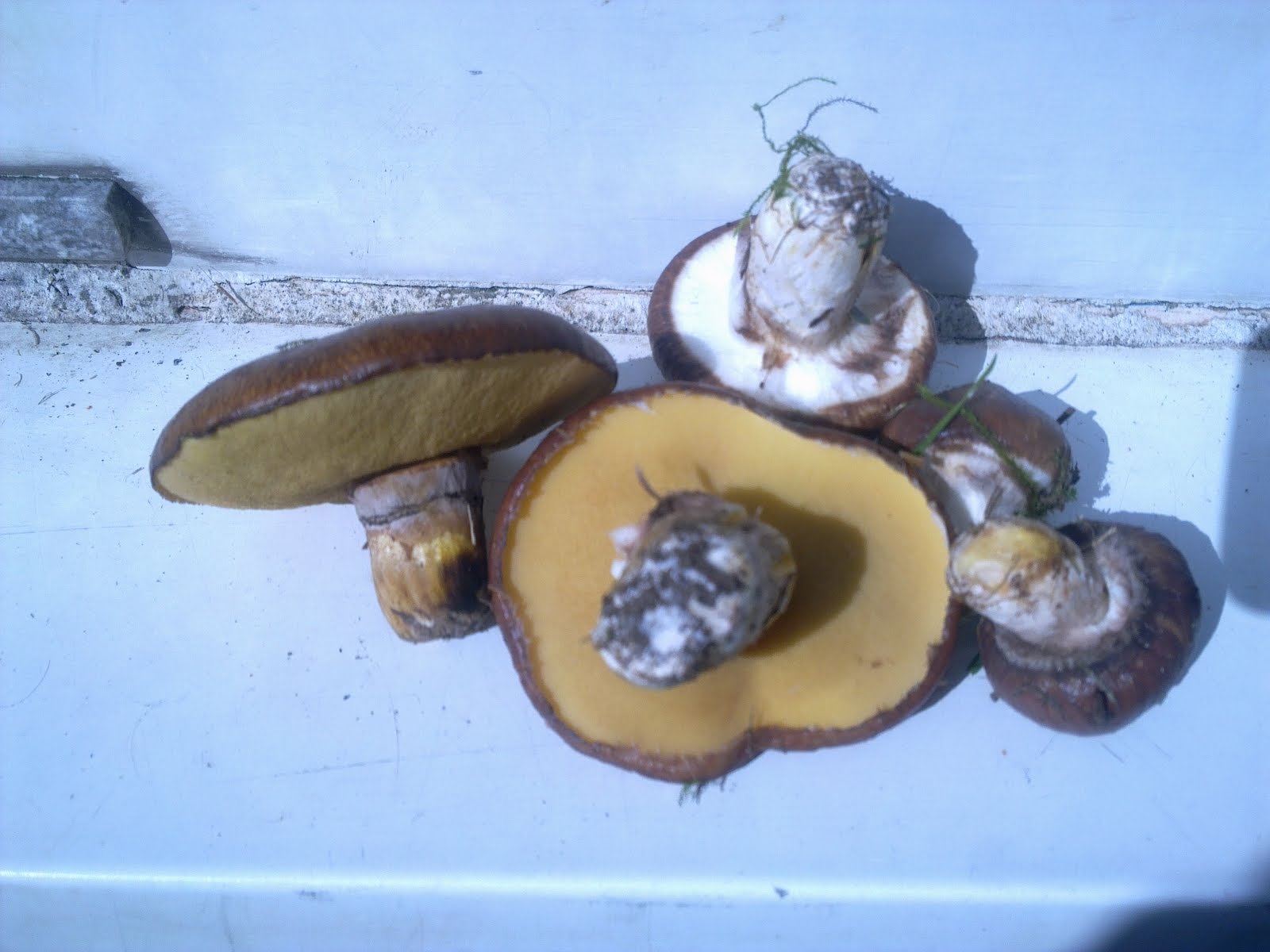
Bay Boletes, Weeping Boletes, Dark Cap Cep, Slippery Jacks and Saffron Milk Caps and a few Woodland Puffballs

Field Mushrooms found on the roof of Cafe Indigo

Bay Boletes

Fly Agaric - the fairy tale mushroom


If you go down in the woods today... you're sure of a surprise or two.

Autumn tends to be all about mushrooms and our executive head chef Adam Clark has certainly found plenty on his woodland foraging trips. Adam has been keeping his eyes down on the look out for all manner of interesting fungi and found the edible, poisonous and hallucinogenic variety.

"I absolutely don’t claim to know everything there is to know about mushrooms," says Adam. "So it's been an educational experience and one we've approached with much caution. We only taste once we have had a positive identification.

"Even Michael, our food and beverage manager, has popped in on his days off with some very exciting findings.

"On Tuesday he came in with some great Shaggy Parasols that looked like drumsticks. We knew these guys, and were happy to try them, as they had been recommended to me.

"I was told to stuff these with some bacon, get them bread crumbed and fry… delicious.

"On Wednesday Michael turned up with another basket full of mushrooms, this time more sinister. They were Yellow Stainers. They look just like field mushrooms, which is why they are the single most common cause of mushroom poisoning in Britain, the stalks are slightly longer though and when broken an intense yellowing appears.

"Steer well clear of these."

Adam has found some rich pickings in the fields and woods near where he lives. He's harvested and soundly identified lots of different varieties including Bay Bolete and Weeping Bolete, Dark Cap Cep, Slippery Jacks and Saffron Milk Caps, a few Woodland Puffballs as well as a couple of Field ones.

He will serve these dried and reconstituted in a consomme soup. "By the way," he adds to anyone thinking of doing a little mushroom hunting of their own, "the Weeping Bolete and Slippery Jack have a mildly poisonous skin which peel, or it may work as a laxative on you!"

Adam has even found the famous Fly Agaric - the fairy tale mushroom with its bright red hood covered in white, moveable spots. "Beautiful, magical," he says "and not seriously poisonous, but should definitely be avoided. If you want to know why…look them up in a mushroom book. I highly recommend the River Cottage Handbook No.1 by John Wright."

"I only had one iffy moment when my dog Slinky wouldn’t return when I called him in the woods. I hauled myself through the trees and bushes only to find him barking at a huge dead badger which couldn’t of been dead for long. I did have a heart in mouth moment of what kind of body he had found!"